Pale Horse murder organization
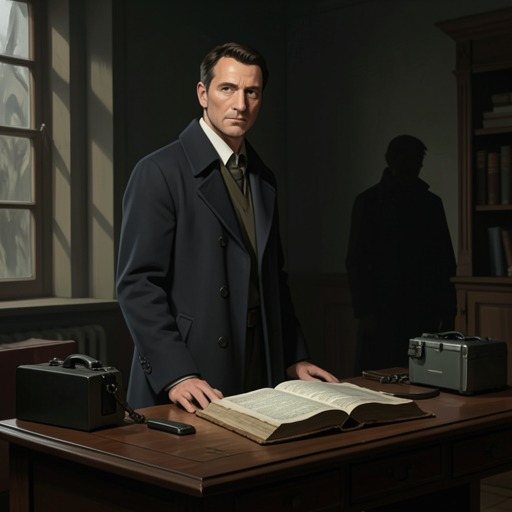
The Pale HorseThe Pale Horse murder organization is a criminal enterprise that arranges the deaths of unwanted people for substantial fees while making those deaths appear natural. Its defining method is division: financial arrangements, the Pale Horse’s theatrical performances, consumer surveys, and the final substitution of a poisoned product are separate tasks. That structure gives the operation a respectable surface and makes it difficult for any one participant, apart from its hidden organizer, to expose the whole chain.
Purpose and Operating Principle
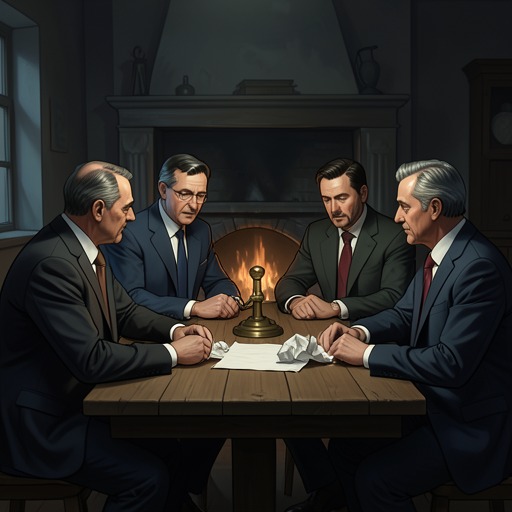
The organization specializes in the removal of people selected by clients, including inconvenient spouses and blackmailers. The scheme is presented as an arrangement concerning the timing of a death rather than an explicit contract to cause one. Its financial intermediary, Mr Bradley, describes the transaction as a wager: a client bets that a named person will live beyond a specified date, while he takes the opposing side. The client can thus frame the transaction as curiosity or business convenience, even when the person’s death is the desired outcome.
Mr Bradley explains that the arrangement varies with the money at stake and, in some cases, the client’s means. He says he does not accept poor clients except in the kind of case where an inheritance is involved. The usual odds work out at five hundred to one; he also proposes odds of fifteen hundred to one when discussing a death expected within a shorter period. The wager supplies a financial mechanism and a layer of plausible deniability: the client appears to be betting on an uncertain event, while the organization undertakes to make the prediction come true.
Division of Roles
The network’s public-facing operation is not its center of control. At the Pale Horse, Thyrza Grey is the ruling presence and conducts a performance intended to impress prospective clients. But she is not the organization’s true strategic mind. The person who plans and coordinates the larger operation remains behind the scenes, while Thyrza and Mr Bradley are paid for their respective roles. Mr Bradley handles the financial and legal side and, according to the account of the arrangement, is not informed about what happens elsewhere.
This separation is deliberate. Each participant has a defined job, and the parts are arranged so that no one has information on everyone else. The hidden organizer alone knows what the operation’s head actually does. The account stresses that this is not a crude gang relying on ordinary thugs or gunmen: its strength lies in carefully allotted work, limited knowledge, and a process that can leave little obvious evidence of foul play.
Surveys and Access to Victims
A consumer questionnaire provides information about the target’s habits. Genuine employees of consumer-research concerns are sent to canvass a particular neighbourhood, given lists of names, and asked to record answers to questions. One worker describes the questions as haphazard rather than focused on a clear line of research. She had considered whether the visits might be reconnaissance for burglary, but they did not ask about rooms, locks, or when residents would be away.
Instead, the questions establish which ordinary products people use. They may concern cereals, cake mixes, soap flakes, detergents, cosmetics, or familiar remedies such as aspirin, sleeping pills, cough pastilles, and indigestion treatments. Survey workers are not asked to collect samples. Their information nevertheless gives the hidden organizer a practical route to the intended victim’s daily life: it identifies a familiar product that can later be replaced.
The final approach is disguised as routine service. The organizer may appear as a porter, a meter reader, a plumber, an electrician, or another workman, carrying credentials that seem appropriate to the role. The apparent reason for the visit is to inspect meters, pipes, or water pressure; the actual purpose is to exchange a product the target already uses for a similar preparation. The visitor then leaves and is not seen in the neighbourhood again. Because the substituted item is familiar, its use does not immediately attract suspicion.
Deaths and Concealment
After the substitution, symptoms may not appear for several days. A doctor is then called, but the illness gives no immediate reason to suspect a crime. Even if the doctor asks about food and drink, an ordinary proprietary product that the patient has used for years is unlikely to seem remarkable. The victims consequently appear to have died of natural causes, and the organization’s central action is concealed within an ordinary pattern of illness and household consumption.
The organization’s reach is greater than the first known names can establish. Investigators have reports of several deaths and indefinite information about others, each apparently due to natural causes; in some cases, people stood to benefit from the deaths, though that fact alone is not evidence. The discovery of the scheme depends in part on a dying woman who knew she was near death and wanted to make her peace with heaven. Her disclosure provides a rare opening into a system designed to keep its participants—and its victims—from seeing the whole design.